How to Improve Your Typing Speed in One Week
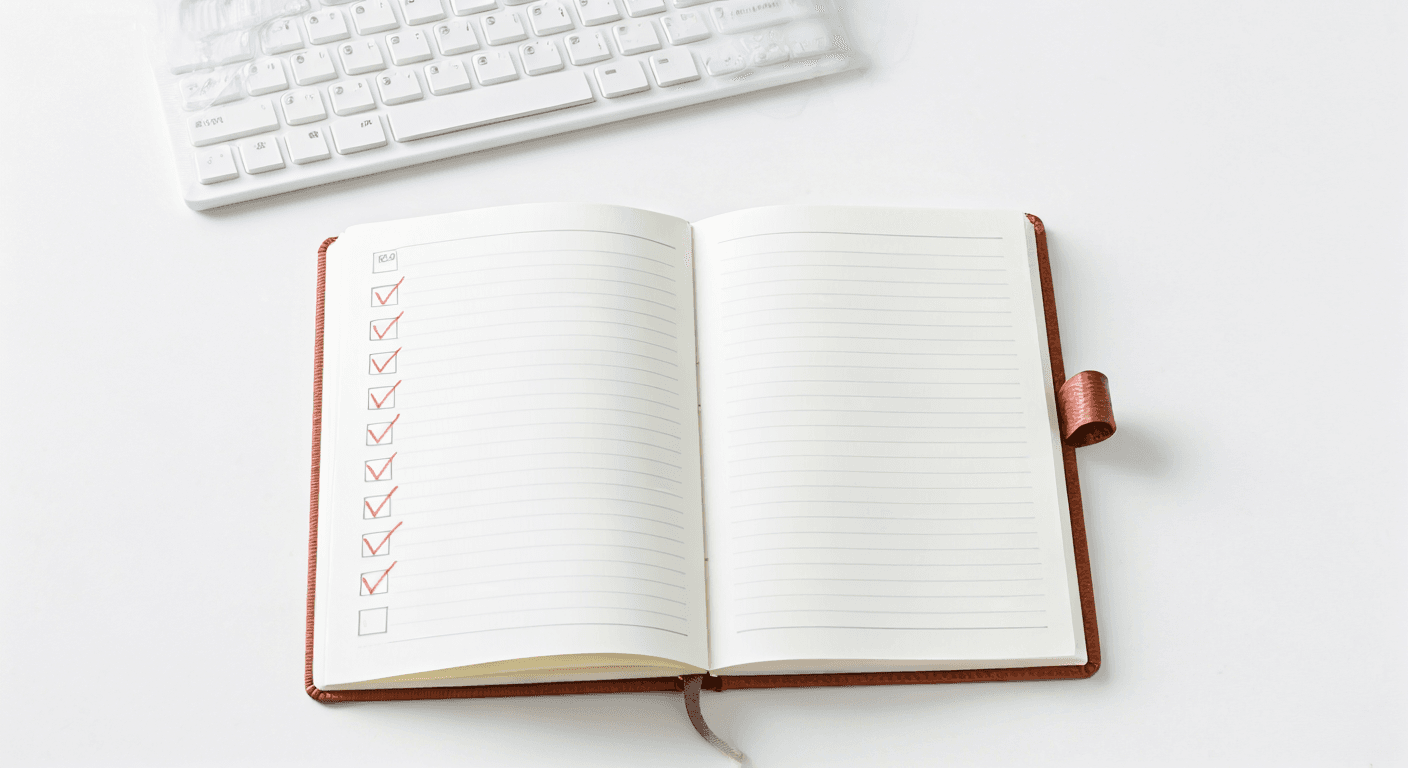
Let's set honest expectations upfront. You're not going from 30 WPM to 100 WPM in seven days. That's not how motor skill development works. But you can realistically gain 5 to 15 WPM in a single week with focused, daily practice. For someone at 35 WPM, hitting 45–50 is absolutely achievable. Here's a day-by-day plan. You'll need about 20 minutes per day. Twenty minutes of deliberate practice beats two hours of unfocused typing.
Day 1–2: Baseline and Posture Fix
Before you practice a single drill, take a typing test. Use any free typing test online and do it three times. Take the average. Write that number down — this is your baseline. You need it to measure progress at the end of the week.
Now fix your posture. This is the single biggest quick win, and most people skip it. Here's what to check:
- Sit up straight. Your back should be against the chair.
- Feet flat on the floor. Crossed legs twist your spine and tighten your shoulders.
- Elbows at roughly 90 degrees, close to your body — not reaching forward.
- Wrists hovering above the keyboard, not resting on the desk or keyboard edge.
- Screen at eye level so you're not hunching forward.
Bad posture creates tension in your shoulders, arms, and hands. That tension slows you down and causes errors. People who fix their posture often see an immediate 3–5 WPM improvement just from relaxing their hands.
Spend the rest of your Day 1 and Day 2 sessions relearning home row position. Place your left fingers on A-S-D-F and your right fingers on J-K-L-semicolon. Feel the bumps on F and J — those are your anchors. Practice returning to this position after reaching for other keys.
Day 3–4: Home Row Drills
These two days are about building muscle memory for the most common letter combinations. Don't worry about speed — focus entirely on accuracy and correct finger placement. Type slowly and get every keystroke right.
- Practice home row letters: a, s, d, f, g, h, j, k, l in various combinations
- Add the row above: q, w, e, r, t, y, u, i, o, p — always returning to home row
- Add the row below: z, x, c, v, b, n, m — same approach
- Practice common two-letter combinations: th, er, on, an, in, he, re, ed, nd, en
The goal here is to type without looking at the keyboard. If you catch yourself peeking, slow down rather than looking down. It's better to sit at 15 WPM with your eyes on the screen than 30 WPM while staring at your hands. You're rebuilding your foundation, and that foundation will support much higher speeds later.
Day 5: Common Words
Here's a fact that changes how you think about typing: just 100 words account for about 50% of all English text. Words like "the," "and," "have," "that," "for," "not," "with," and "you." If you can type these 100 words without thinking, half of everything you'll ever type becomes automatic.
Spend today's session practicing the most common English words. Search for "100 most common English words typing practice" and you'll find plenty of free resources. Type each word slowly at first, then build speed as it feels comfortable. Aim for each word to feel like a single fluid motion rather than a sequence of individual keystrokes.
Day 6: Full Sentences
Time to put it together. Today you're typing complete sentences and short paragraphs. Pick text from anything you enjoy reading — a news article, a book chapter, song lyrics. The content doesn't matter as long as it's real, complete sentences.
Pay attention to the parts that trip you up. Capital letters? Periods and commas? Apostrophes? These transition points are where most speed is lost. When you find a trouble spot, type that sentence three more times. A useful trick: read the entire sentence before you start typing it. When you know what's coming, your fingers can prepare for the next word while you're still finishing the current one.
Day 7: Timed Tests
This is measurement day. Take the same typing test you used on Day 1. Do it three times and average the results. Compare to your baseline. Most people following this plan see a 5–15 WPM improvement, with the biggest gains going to people who started below 40 WPM.
If your improvement was on the lower end, don't be discouraged. Check your accuracy percentage — if it went up, your speed gains are coming. Accuracy improvements always precede speed improvements.
What NOT to Do
The biggest mistake people make is exactly what it sounds like: they try to type faster. They push their fingers to move as quickly as possible and their error rate doubles. Every backspace costs more time than typing the word correctly at a slower speed.
- Don't sacrifice accuracy for speed — slow and correct beats fast and sloppy
- Don't practice for more than 25–30 minutes at a time — fatigue breeds bad habits
- Don't skip the posture check — set a reminder to fix your position every 10 minutes
- Don't look at the keyboard, even when you make mistakes — fight the urge
- Don't compare yourself to people posting 120 WPM scores online — they've been at it for years
One week builds the habit. The real gains come in weeks two through six, when your muscle memory solidifies and your fingers begin moving without conscious direction. Keep up the 20-minute daily sessions and you'll be surprised where you end up in a month.
Related posts
How to Improve Typing Accuracy (Without Slowing Down)
Practical accuracy drills and habits that cut your error rate without tanking your speed. A step-by-step approach for any skill level.

Typing Practice for College Students: Write Papers and Ace Exams Faster
How faster typing saves college students hours every week on essays, research papers, and timed exams.
How to Type Faster for Gaming: A Gamer's Guide to Keyboard Speed
Why typing speed gives gamers a real competitive edge in chat, commands, and coordination. Practical drills that transfer directly to gaming.
Published March 2026