How to Get a Typing Certificate (And Which Ones Employers Actually Care About)
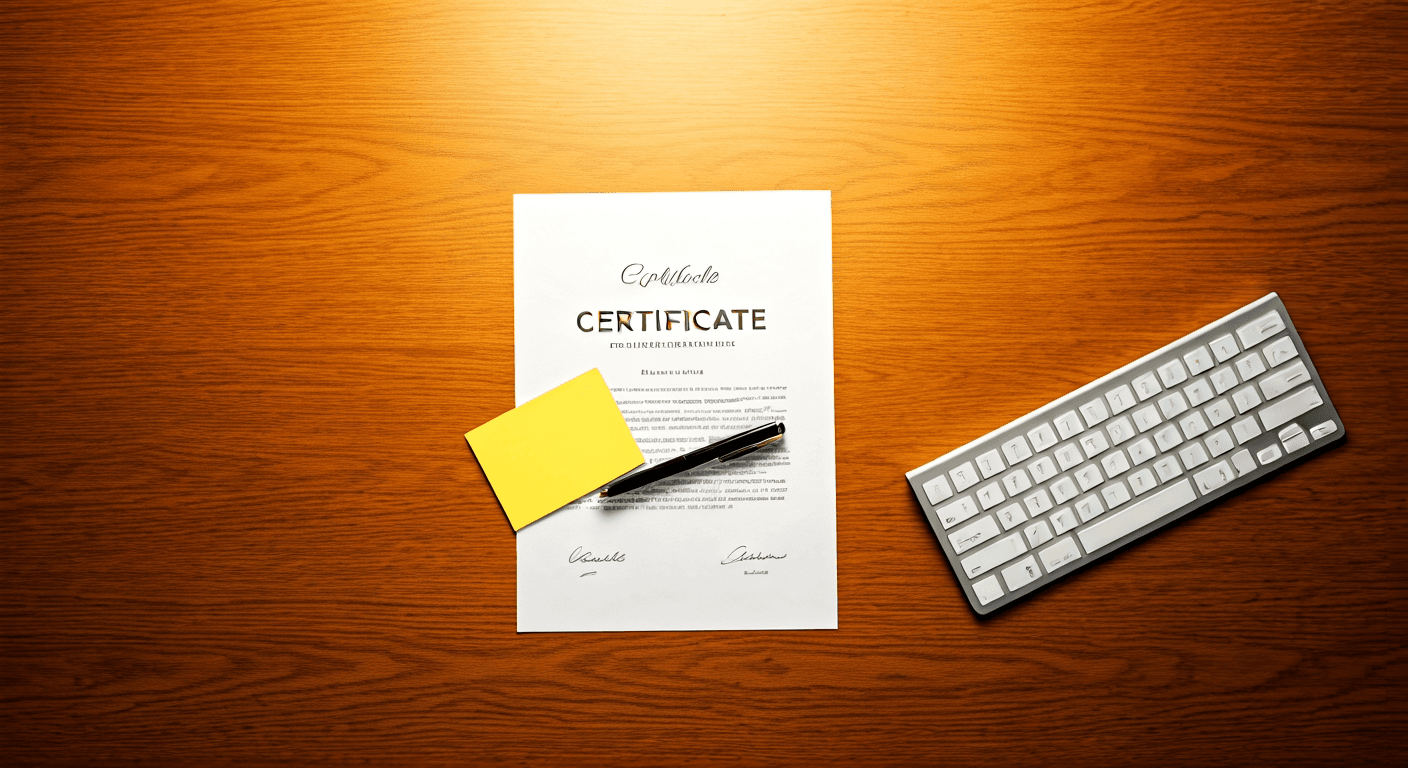
So you're thinking about getting a typing certificate. Maybe a job posting mentioned it, or maybe you just want something concrete to prove you can type. Fair enough. But before you spend time or money on one, let's talk about which certificates actually carry weight and which ones are basically a PDF you could have made yourself.
Do Typing Certificates Actually Matter?
The honest answer: it depends entirely on the job. If you're applying for a data entry position, an admin assistant role, a dispatch job, or anything in transcription, a typing certificate can genuinely help your application. Hiring managers for those positions deal with candidates who claim "fast typing skills" on their resumes all the time. A certificate with a verified WPM score gives you credibility they can't easily dismiss.
But if you're a software developer, a marketing manager, or a graphic designer? Nobody is going to ask for your typing certificate. They'll care about your portfolio, your experience, and your ability to do the actual work. Typing speed is assumed to be adequate for those roles, and listing a certificate would look a bit odd on a resume.
The bottom line is this: certificates matter most when typing IS the job, or a critical part of it. For everything else, they're nice to have but won't move the needle.
Which Typing Certifications Exist
There's no single "industry standard" typing certificate the way there is for, say, accounting or project management. Instead, you've got a patchwork of options:
- Typing.com Certificate — Free. You complete their course and take a timed test. It's one of the most widely recognized free options, and plenty of schools use it too. The certificate shows your WPM and accuracy, and you can share a verification link.
- TypingTest.com Certificate — Also free. You take a timed test (1, 2, 3, or 5 minutes), and if your score meets their threshold, you can print or download a certificate. It's straightforward and commonly referenced.
- NOCTI (National Occupational Competency Testing Institute) — This is a paid, proctored assessment used by vocational schools and some employers. It covers keyboarding as part of broader business and office skills evaluations. It carries more weight because it's supervised and standardized.
- Government and civil service typing tests — If you're applying for a federal, state, or municipal job, many agencies have their own typing assessments. These aren't certificates you go out and get on your own. They're part of the hiring process, administered during the application or interview stage.
- Ratatype Certificate — Free with a basic account. You take a timed test and receive a certificate with your speed and accuracy. It assigns you a level (gold, silver, platinum) based on performance.
Which Jobs Require or Value Them
Certain roles specifically look for typing proficiency, and a certificate can set you apart:
- Data entry clerks — Employers typically want 60-80 WPM with 95%+ accuracy. A certificate proving you hit those numbers saves them from having to test you separately.
- Court reporters — This is a specialized field requiring 200+ WPM on a stenotype machine, but even general court clerks need to demonstrate 55-70 WPM on a standard keyboard.
- Administrative assistants — Most postings ask for 50-65 WPM. Having a certificate ready means you can attach it to your application and skip the back-and-forth.
- 911 dispatchers and public safety roles — Speed under pressure matters here. Agencies often want 40-50 WPM minimum, but they care deeply about accuracy because mistakes have real consequences.
- Medical and legal transcriptionists — You'll need 65-80 WPM minimum, and many employers want to see proof before they invest in training you on their specific terminology and systems.
- Virtual assistants and remote admin roles — Since the employer can't watch you work, a certificate provides at least some baseline assurance of your skills.
How to Prepare for a Typing Certification Test
The good news is that typing tests are predictable. You know exactly what's coming: a block of text and a timer. Here's how to get ready:
- Know your baseline first. Take three or four typing tests on different days at different times. Average your scores. That's your real WPM, not the one lucky attempt where everything clicked.
- Focus on accuracy before speed. If you're making more than 3-4 errors per minute, slow down. Every error you have to go back and correct costs you more time than just typing slightly slower in the first place.
- Practice for 20-30 minutes a day, not 2 hours once a week. Consistency builds muscle memory. Marathon sessions just make your hands tired and your accuracy worse.
- Practice with the same test duration you'll face. A 1-minute test feels very different from a 5-minute test. Longer tests expose weaknesses in your endurance and consistency that short tests hide.
- Work on your trouble letters. Everyone has a few keys that slow them down. For a lot of people, it's the numbers row, punctuation, or uncommon letters like Q, Z, and X. Targeted drills on weak spots improve your score faster than generic practice.
For WPM targets, here's what to aim for based on the certificate or job:
- Basic proficiency certificate: 35-45 WPM at 92%+ accuracy.
- Intermediate or professional certificate: 50-65 WPM at 95%+ accuracy.
- Advanced or expert certificate: 70-90+ WPM at 97%+ accuracy.
- Data entry roles: 60-80 WPM or 8,000-10,000 keystrokes per hour.
- Transcription roles: 70-85 WPM with high accuracy on varied content including medical or legal terms.
Free vs. Paid Options: An Honest Assessment
Free certificates from sites like Typing.com, TypingTest.com, and Ratatype are perfectly fine for most situations. If a job posting says "must demonstrate typing proficiency," a free certificate with a verifiable link or a clear WPM and accuracy score will satisfy that requirement nine times out of ten.
The main limitation of free certificates is that they're unproctored. You took the test at home, and theoretically, someone else could have taken it for you. Most employers don't worry about this for entry-level or mid-level positions, but for government jobs or roles that require a formal assessment, they'll usually administer their own test anyway.
Paid certificates, like NOCTI or proctored assessments through staffing agencies, carry more weight specifically because someone verified you were the one sitting at the keyboard. If you're going after a competitive role where multiple candidates have similar qualifications, a proctored certificate can be a differentiator. But for most people applying to most jobs, a free certificate does the job.
How to List Typing Skills on a Resume
Where and how you list typing skills matters more than whether you have a certificate. Here are a few approaches that actually work:
- In your skills section, keep it simple: "Typing: 68 WPM, 97% accuracy (Typing.com certified)." Numbers are more convincing than vague claims like "fast typist."
- If the job posting specifically mentions typing speed, mirror their language. If they ask for "60+ WPM," make sure your resume says your exact score, not just "proficient."
- Don't put your typing certificate in the "Education" or "Certifications" section alongside your degree or professional licenses. It doesn't belong there. The skills section is the right place.
- If you have the verification link from your certificate, include it in your application or cover letter. Hiring managers who care about typing speed will actually click it.
One last thought: a typing certificate is a snapshot. It shows what you could do on one particular day. The best proof of your typing ability is consistent practice and genuine skill that shows up every time you sit down at a keyboard, whether anyone is watching or not. If you're going to get a certificate, make sure the number on it actually reflects how you type on a normal Tuesday afternoon, not just your personal best after ten warm-up rounds.
Related posts
Typing Tests for Job Interviews: What Employers Actually Look For
Which jobs require typing tests, what scores to aim for, and how to prepare in one to two weeks.

Typing Speed Requirements by Job: What You Actually Need
Specific WPM requirements for data entry, admin, dispatch, transcription, and more — plus how to list typing speed on your resume.
Why Typing Speed Matters More When You Work from Home
Remote work means more typing — Slack, email, docs. The math on how WPM affects your productivity and response time.
Published March 2026