Typing Games vs. Traditional Drills: Which One Actually Improves Your Speed?
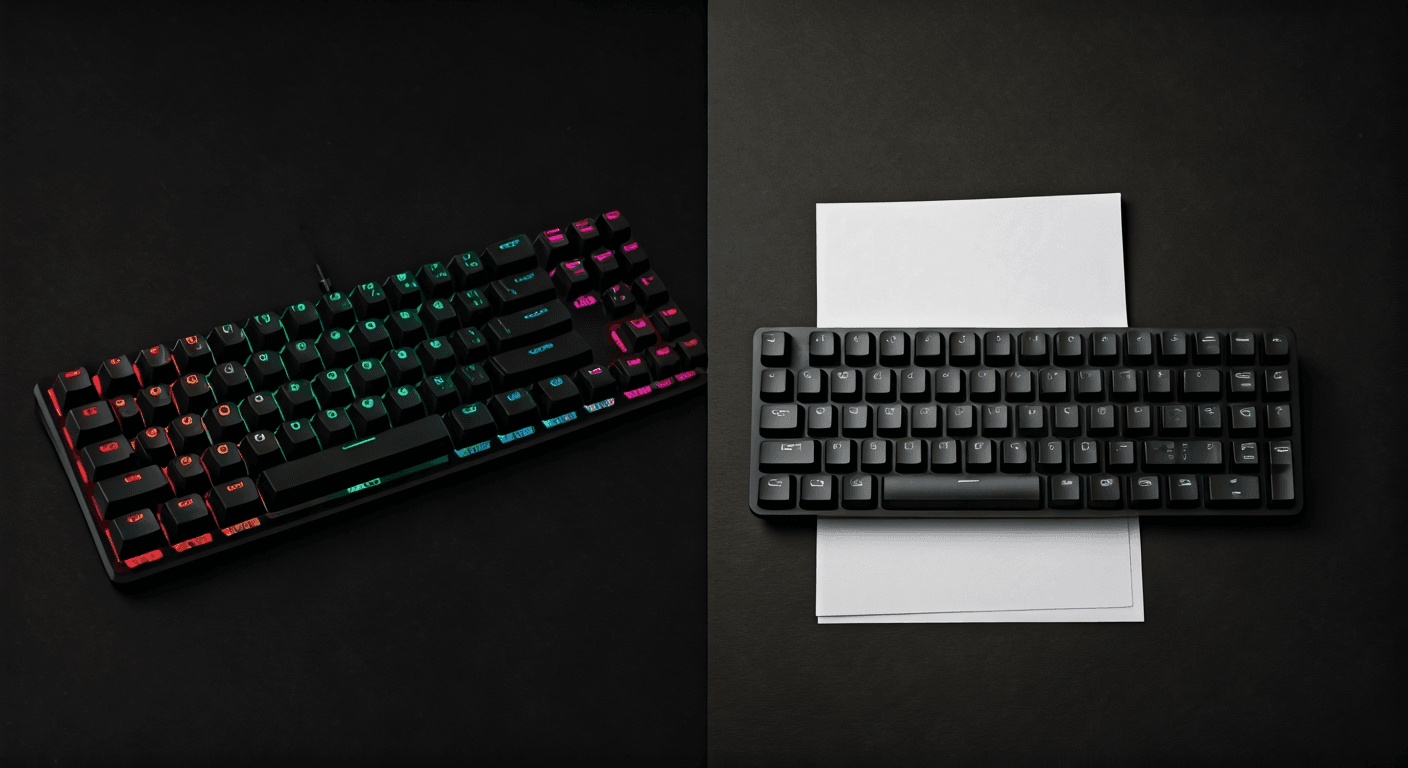
Walk into any typing forum and you'll find two camps: people who swear by structured drills and people who improved their speed exclusively through typing games. Both sides have evidence. Both sides have blind spots. The truth is that games and drills train different aspects of typing, and the smartest approach uses both — but in different proportions depending on where you are in your journey.
What Typing Games Do Well
Games excel at one thing above all else: keeping you practicing. A 2021 study published in Computers & Education found that students using gamified typing software practiced 40% more than students given traditional drill-based programs. They didn't practice because they were more disciplined. They practiced because it was fun.
That extra practice time translates directly into improvement. If a game gets you to type for 30 minutes instead of 15, you're getting twice the reps regardless of the exercise quality. Consistency is the single biggest predictor of typing improvement, and games hack your brain into being consistent.
Games also train raw finger speed under pressure. When falling letters are about to hit the bottom of the screen, your fingers learn to move fast without overthinking. This builds a kind of reactive speed that's hard to develop through calm, structured practice alone.
Where Games Fall Short
The problem with games is that they reward speed over accuracy. When you're trying to blast zombies by typing words, you're not pausing to ask yourself which finger should hit the "b" key. You're just mashing whatever gets the word done. This can reinforce bad habits — hunt-and-peck patterns that feel fast but cap your speed at 50 or 60 WPM because your finger technique has a ceiling.
Games also tend to focus on common, short words. You get really fast at typing "the" and "and" and "with," but your pinky finger still can't reliably hit the "z" key because no game is going to throw "zigzag" at you very often.
What Traditional Drills Do Well
Drills are boring by design, and that's their strength. When there's no explosion or score to chase, your brain focuses on the mechanics: correct finger placement, smooth transitions between keys, consistent rhythm. Good drill programs isolate your weak spots — they notice that you stumble on "qu" combinations and give you 50 of them in a row.
- Accuracy improvement: drills force you to slow down and get it right before speeding up
- Weak-key targeting: structured programs identify and attack your specific problem areas
- Proper technique: drills reinforce correct finger-to-key assignments
- Muscle memory: repetitive patterns carve deep neural pathways for common letter combinations
Where Drills Fall Short
Nobody has ever said "I can't wait to do my typing drills." Motivation is the Achilles' heel of drill-based practice. People start strong, do it for a week, then quietly stop. A perfect practice method that you abandon after five days is worse than a mediocre method you stick with for three months.
Drills can also create a false sense of progress. You might nail "asdf jkl;" at 80 WPM in isolation, but the moment you're typing a real sentence with punctuation and capital letters, your speed drops by 30%. Drills sometimes train you for the drill, not for real typing.
Specific Game Types and What They Train
- Falling words games (like ZType): reaction speed and common word recognition
- Racing games (like TypeRacer): sustained speed over longer passages, competitive pressure
- Story-based games (like Epistory): engagement and varied vocabulary
- Survival games (like Type to Survive): burst speed and panic-resistance
- Multiplayer typing games: competitive motivation and real-world speed benchmarking
The Ideal Mix
Here's a practical framework based on your current level:
Beginners (under 40 WPM): Spend about 60% of your practice time on drills and 40% on games. You need to build correct technique first — games at this stage can cement bad habits. Use games at the end of a session as a reward for doing your drill work.
Intermediate typists (40–60 WPM): Split it roughly 50/50. Your technique is decent enough that games won't ruin it, but you still benefit from targeted drill work on weak keys and tricky combinations.
Advanced typists (above 60 WPM): Flip the ratio to 40% drills and 60% games. At this level, your technique is mostly locked in, and the biggest gains come from raw practice volume — which games are better at sustaining. Use short drill sessions to target specific weaknesses that plateau your speed.
The Bottom Line
Don't pick a side. Use drills to build your foundation and fix your weaknesses. Use games to rack up volume and keep yourself coming back. The best typing practice is the one you actually do, and most people need a mix of structure and fun to keep going long enough to see real results.
Related posts
How to Improve Typing Accuracy (Without Slowing Down)
Practical accuracy drills and habits that cut your error rate without tanking your speed. A step-by-step approach for any skill level.

Typing Practice for College Students: Write Papers and Ace Exams Faster
How faster typing saves college students hours every week on essays, research papers, and timed exams.
How to Type Faster for Gaming: A Gamer's Guide to Keyboard Speed
Why typing speed gives gamers a real competitive edge in chat, commands, and coordination. Practical drills that transfer directly to gaming.
Published March 2026